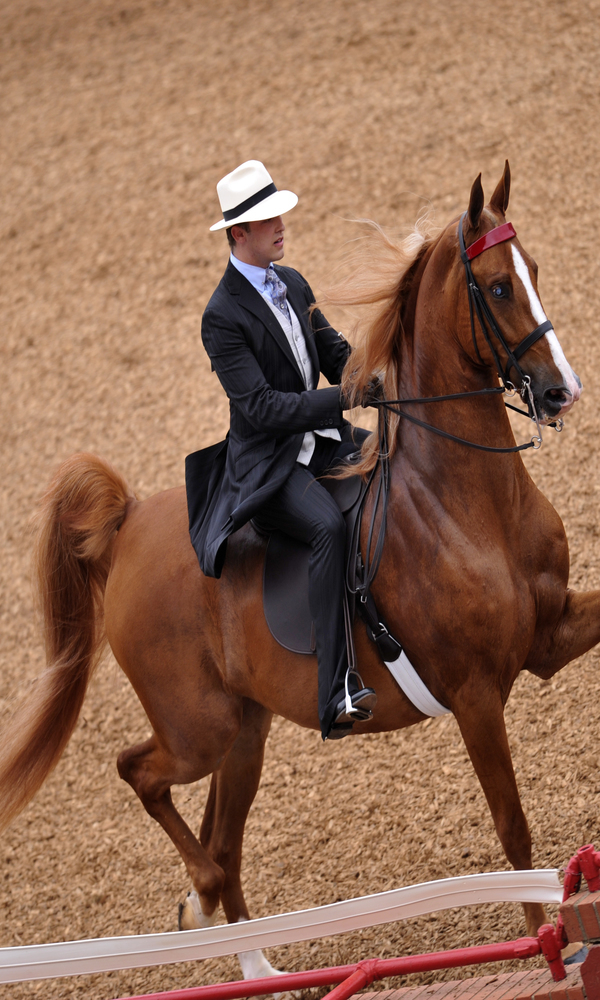
William Woods University continues to be at the forefront of equestrian education. Whether you are pursuing a bachelor’s degree in equine administration, or perhaps, something completely different, take advantage of the opportunity William Woods University provides to learn from nationally renowned faculty members and from top industry professionals in various clinics and seminars.
Minor Requirements
Core Credits: 11.00
| This course is an introduction to equestrians and horse organizations and their objectives including the extent of horse sport on the national and international level. The role of the horse in today’s society will be explored. The four WWU disciplines of Dressage, Hunter/Jumper, Saddle Seat and Western along with their respective practices will be surveyed. Points concerning horse behavior, care of the domesticated horse, developing a professional lexicon and the importance of proper fitting and uses of basic tack will be covered. The course will also explore employment opportunities and practices in the industry. credits: | Introduction to the Horse Industry | 3 |
| Students will explore management and treatment protocols for performance horses. Identification and administration methods and dosage for equine drugs and medications associated with the competition or working horse will also be addressed. Equine infectious diseases, injuries, illnesses and complications are a primary focus of the course. credits: | Theory of Performance Hrs Hlth Mgmt | 3 |
| Students will further explore more elements of practical management skills, the normal horse, health issues, lameness, drugs and medications and competitive drug rules. Prerequisite: EQU117 credits: | Theory Prfrmnc Horse Hlth Mngmt II | 3 |
| An introduction to applied horse management emphasizing the day to day care of horses. All aspects of the daily care and health management of a string of horses will be practiced. (Required grade of C or higher to satisfy major requirements). Prerequisites: EQU111 & EQU 118 credits: | Horse Management Practicum I | 3 |
Required Upper Level Electives - 6 Credits
credits: | Independent Study | 3 |
| Students will evaluate and develop a variety of communication techniques for the equine industry. The course includes exposure to innovative communication methods in the field. Prerequisite: ENG102 credits: | Equestrian Communication | 3 |
| A theoretical and practical approach to managing horse shows, clinics, equine expositions, or events. Students obtain applied experience managing campus horse shows and clinics during the semester. credits: | Equine Event Management | 3 |
credits: | Internship I | 3 |
| This course will further the students understanding of the mechanics and techniques of running of a successful equestrian facility. Students will practice hands on application of a variety of facility management skills in several areas. Prerequisite: EQA205 credits: | Facility Management Practicum II | 3 |
credits: | Advanced Projects | 3 |
credits: | Internship II | 3 |
credits: | Internship III | 6 |
credits: | Independent Study | 3 |
| This course will provide the student with a survey of equine behavior and training techniques through videos, research and required reading. The physical and mental processes that contribute to equine behavior will be covered. A variety of methods of working with the foal, haltering, leading, early handling procedures, longeing, long lining, bitting and backing the colt will be covered. Prerequisite: Junior/Senior standing or permission of instructor credits: | Theory Equine Behav & Train Methods | 3 |
| This course primarily focuses on the horse’s musculoskeletal system or ”the anatomy of movement,” although other important points of equine anatomy will be examined. Conditioning programs for these anatomical systems will be studied and integrated in the development of conditioning programs applicable to various performance horses and their specific needs. Digestive physiology and the development of appropriate feeding programs for the modern performance horse will be covered. Overview of proper farrier methods for all horses will be reviewed while the applicable variations of shoeing in the different performance disciplines will be studied. credits: | Practical Equine Anatomy & Conditng | 3 |
| The student will learn basic techniques of the construction and the repair of tack. credits: | Tack Construction & Repair | 1 |
| This course will explore the horse/human relationship from prehistory through modern times and how that relationship has evolved. The development of modern riding will be explored through equestrian literature and artwork. credits: | Origins of Modern Riding | 3 |
| This course addresses breed/type specifics and form to function in relation to movement and performance requisites. Students will compare and contrast principles of ideal conformation, temperament, serviceability, movement and competitive ability. Prerequisite: EQS 201 or EQS306 credits: | Equine Evaluation | 3 |
| This course addresses a wide range of topics geared to developing the student’s knowledge as it relates to the history, breeding, and selection of the dressage horse. The progressive training scale and development of both national and international issues as they relate to competition and governing associations which address local, regional, national, and Olympic goals will be considered. credits: | Dressage Issues | 2 |
| This course is designed to give the student a better understanding of the theories of riding hunt seat and important issues the hunter jumper industry faces today. The course will cover a brief history of hunt in the U.S., theories of riding and training, USEF rules, bits and equipment, shoeing, suitability of horses to the intended use, course design, judging hunters and jumpers, jumping mechanics, and problem solving for the hunters and jumpers. credits: | Hunter/Jumper Issues | 2 |
| Current issues in riding and showing saddle seat and the breeds of horses that emphasize this style of riding. Topics will include the theories and systems of riding, training theories as they apply to riding, the recent history of the seat and show ring rules and strategies. credits: | Saddle Seat Issues | 2 |
| A historical survey course on the development of the world’s horse breeds with emphasis on breeds developed in the United States. Course topics include horse evolution, domestication, the emergence of specific horse ”types” leading to actual breeds and the influence that the horse has had on all aspects of human culture. A multifaceted research project of the student’s choice will be required. credits: | History of Breedsand Bloodlines | 3 |
| This class explores current issues and debates within the western horse industry. Various training methods and future trends are discussed. Aspects of the industry will be covered through research and lecture and students will utilize a variety of learning methods including, case studies, presentations, essays and a major research project. credits: | Western Issues | 2 |
| A practical teaching class which continues the development of applied teaching skills. Assistance with an applied riding class will occur. Observation, class management, teaching skills, and riding student and peer teaching assessment will be practiced. Students will meet at the scheduled course time with all teaching techniques students in their discipline and will also serve as a teaching assistant for one applied riding course. Prerequisites: Any Teaching Techniques II and PED104 (must pass & receive Adult First aid and CPR certification) credits: | Teaching Techniques III-Dressage | 2 |
| A practical teaching class which continues the development of applied teaching skills. Assistance with an applied riding class will occur. Observation, class management, teaching skills, and riding student and peer teaching assessment will be practiced. Students will meet at the scheduled course time with all teaching techniques students in their discipline and will also serve as a teaching assistant for one applied riding course. Prerequisites: Any Teaching Techniques II and PED104 (must pass & receive Adult First aid and CPR certification) credits: | Teaching Techniques III-Hunter/Jump | 2 |
| A practical teaching class which continues the development of applied teaching skills. Assistance with an applied riding class will occur. Observation, class management, teaching skills, and riding student and peer teaching assessment will be practiced. Students will meet at the scheduled course time with all teaching techniques students in their discipline and will also serve as a teaching assistant for one applied riding course. Prerequisites: Any Teaching Techniques II and PED104 (must pass & receive Adult First aid and CPR certification) credits: | Teaching Techniques III-Saddle Seat | 2 |
| A practical teaching class which continues the development of applied teaching skills. Assistance with an applied riding class will occur. Observation, class management, teaching skills, riding student and peer teaching assessment will be practiced. Students will meet at the scheduled course time with all teaching techniques students in their discipline and will also serve as a teaching assistant for one applied riding course. Prerequisites: Any Teaching Techniques II and PED104 (must pass & receive Adult First aid and CPR certification) credits: | Teaching Techniques III-Western | 2 |
| A practical teaching course that continues the development of applied teaching skills. Assistance with an applied riding class will occur. Observation, class management, teaching skills, and riding student and peer teaching assessment will be practiced. Students will meet at the scheduled course time with all teaching techniques students in their discipline and will also serve as a teaching assistant for one applied riding course. Prerequisites: Any Teaching Techniques III and PED104 (must pass & receive Adult First aid and CPR certification) credits: | Teaching Techniques IV-Dressage | 2 |
| A practical teaching course that continues the development of applied teaching skills. Assistance with an applied riding class will occur. Observation, class management, teaching skills, and riding student and peer teaching assessment will be practiced. Students will meet at the scheduled course time with all teaching techniques students in their discipline and will also serve as a teaching assistant for one applied riding course. Prerequisites: Any Teaching Techniques III and PED104 (must pass & receive Adult First aid and CPR certification) credits: | Teaching Techniques IV-Hunter/Jumpr | 2 |
| A practical teaching course that continues the development of applied teaching skills. Assistance with an applied riding class will occur. Observation, class management, teaching skills, and riding student and peer teaching assessment will be practiced. Students will meet at the scheduled course time with all teaching techniques students in their discipline and will also serve as a teaching assistant for one applied riding course. Prerequisites: Any Teaching Techniques III and PED104 (must pass & receive Adult First aid and CPR certification) credits: | Teaching Techniques IV-Saddle Seat | 2 |
| A practical teaching course that continues the development of applied teaching skills. Assistance with an applied riding class will occur. Observation, class management, teaching skills, and riding student and peer teaching assessment will be practiced. Students will meet at the scheduled course time with all teaching techniques students in their discipline and will also serve as a teaching assistant for one applied riding course. Prerequisites: Any Teaching Techniques III and PED104 (must pass & receive Adult First aid and CPR certification) credits: | Teaching Techniques IV-Western | 2 |
| This course is designed to develop an understanding of equine anatomy and physiology. Special attention will be given to the field of exercise physiology as it relates to the equine athlete. Students in this course will investigate the structure and function of the equine musculoskeletal, cardiovascular, respiratory, digestive, nervous and endocrine systems. Equine specific adaptions will be emphasized throughout the course. Prerequisites: EQS306 or (EQU117, EQU118, BIO124/125 and CHM124/125) credits: | Equine Anatomy and Physiology | 3 |
| This course will explore the evolution of controlling the horse as well as types, mechanics and regulations of bits and bridles as they pertain to modern day use and competition. credits: | Bits and Bridles: History, mechanics and regulations | 3 |
| Requires a minimum of 120 clock hours in an approved work situation. The student must submit a log documenting the work dates and times and describing the work activities as they relate to the objectives of the EQS major. In addition, the student will submit three reflective essays that address the student’s goals as they begin the internship, their evaluation of their experience at the midway point of the internship, and a final essay reflecting on their experience. Requires permission of the division chair. credits: | Internship I | 3 |
credits: | Advanced Projects | 3 |
| This course is an advanced study of equine veterinary topics. Open only to students with senior standing. Prerequisites: EQU117, EQS 306 and Senior Standing credits: | Veterinary Medicine & Reproduction | 3 |
| This course will provide opportunities for further development of teaching skills through observation of teaching methods and practical teaching experience. May be repeated once for credit. Prerequisites: Teaching Tech IV any discipline credits: | Advanced Teaching Practicum | 2 |
| Students will explore a variety of veterinary techniques used to manage performance horses as well as routine health management in the classroom and lab setting. Emergency care and treatment will be addressed as well as aftercare. Concurrent enrollment in the Veterinary Techniques Lab is required. Prerequisite: EQS306 and EQU391 Corequisite: EQS376 and EQS 417 Veterinary Techniques Practicum Lab credits: | Veterinary Techniques Practicum | 3 |
| Students will explore a variety of veterinary techniques used to manage performance horses as well as routine health management in the lab setting. Emergency care and treatment will be addressed as well as aftercare. Prerequisite: (EQS306 and EQU391) or EQS376 Corequisite: EQS 416 Veterinary Techniques Practicum credits: | Veterinary Techniques Practicum Lab | 0 |
credits: | Internship II | 3 |
credits: | Internship III | 6 |
| Students will explore ethical and moral dilemmas within the Equine Industry. Issues may include slaughter, euthanasia, unwanted horse solutions, Mustangs, cloning, embryo transfer, federal land use, GMOs, land use regulations. Students expected to form educated opinions on these subjects and be able to respond in a non-emotional way to someone outside the Industry. Major project centered on a bill currently in progress which will impact the industry. credits: | Conflicts & Contrvs Equine Indstry | 3 |
| An applied management course emphasizing the further development of the skills necessary for the day to day care of horses. All aspects of the daily care and health management of a larger string of horses will be practiced. (Required grade of C or higher to satisfy major requirements – must be taken before student accumulates 90 credit hours.) Prerequisites: EQU 201; passed with C grade or higher. credits: | Horse Management Practicum II | 4 |
| In this course, students will develop leadership and supervision skills through active practice. Such areas as motivating others, team building, group dynamics and decision making will be explored in the practical environment of the Equestrian Complex. Prerequisites: EQU391 and permission of the instructor credits: | EQS Supervision and Leadership | 2 |
| Emphasis upon equipping current and prospective leaders in the horse industry with the background and skills to achieve their potential while focusing on the specific nuances of the equine industry. Development, application and reflection of personal leadership capabilities through self-assessments and experiential learning activities. Prerequisites: EQU 111, EQU 117, EQU 118 credits: | Equestrian Leadership Strategies | 3 |
| Students will engage in the application of the skills and techniques acquired through their equestrian program in a seminar format. Analysis of the industry, characteristics for successful employment and strategies for advancing in the field are a focus of the course. Prerequisite: Successful completion of the proficiency examinations for all declared Equestrian majors credits: | Equestrian Senior Seminar | 3 |
| This lecture course is designed to provide an overview of equine business practices. Three main course elements include: horse transactions (buying, selling, leasing, donating, contracts, etc.), and business management (business plans, personnel management, customer relations, advertising, marketing, legal issues, taxation, insurance, record keeping, book keeping, leadership principles, etc.). Prerequisites: Senior Standing credits: | Equine Business Practices | 3 |
| This course offers an overview of the creation and distribution of digital media in the equine industry; students will work with a faculty mentor to create a professional portfolio including examples of digital media such as images, web pages, podcasts, webinars, websites, social media, apps, and online advertising. Technology Requirements: Access to digital cameras/video cameras, high-speed internet. Prerequisite:BUS332 or EQA312 credits: | Applied Digital Media for the Equine Industry | 3 |
| Students will complete their required EQA, EQS, and EQGS portfolio during the class. Reflective writing and a through understanding of program objectives for the equestrian studies major are a focus of this course. Corequisites: EQU403 credits: | Equestrian Senior Portfolio | 1 |
Required Riding Electives - 4 Credits
| This course is designed for the incoming student who aspires to major in EQS or EQA but who has very limited riding experience. Concepts to be covered include correctly catching and haltering the horse, proper grooming and cooling out, tacking up for Western and English seats, mounting and dismounting, proper aids for halt, walk, and trot, identifying correct posting diagonals, developing correct riding position, general horse safety and ring etiquette, and canter if applicable. Required Riding fee credits: | Fundamentals of Horsemanship I | 1 |
| This course is designed for the rider who is new to riding forward seat hunt. It covers basics of riding class protocol in the barn as well as the ring, extensive attention will be paid to fundamentals of position, control on the flat at walk, trot and canter, and important safety procedures leading to position and control over poles. This course may be repeated for credit. (Riding fee) credits: | Introduction to Forward Seat | 1 |
| This course is designed for the rider who is new to riding Saddle Seat. It covers basics of riding class protocol in the barn as well as the ring. Extensive attention will be paid to fundamentals of position control at the walk, trot, and canter leading up to 5-Gaited riding. This class may be repeated for credit. credits: | Introduction to Saddle Seat | 1 |
| The fundamental principles of dressage are addressed in the applied course and are geared toward developing good sport, enjoyment, and safety. Topics include preparing both the rider and horse in basic training, the training center, use and care of dressage equipment, work on the lunge and rider position. This course may be repeated for credit. (Riding fee) credits: | Fundamentals of Dressage | 1 |
| This course covers the basics of riding the hunter type horse. Topics include type and fit of equipment, proper grooming and riding class protocol in the barn as well as the ring, the fundamentals of position, control on the flat and over small fences, and important safety procedures. This course may be repeated for credit. Required Riding fee credits: | Fundamentals of Hunt Seat | 1 |
| This course covers the basics of riding saddle seat. Topics include the type and fit of equipment, proper grooming and cooling out procedures, riding class protocol in the barn as well as in the ring, and the fundamentals of position and control. Students will be introduced to gaited work. This course can be repeated for credit. (Riding fee) credits: | Fundamentals of Saddle Seat | 1 |
| This course covers basic western equitation ad well as fundamental warm-up techniques, training methods and show ring strategies for western riders and western horses. In addition, students will have the opportunity to explore riding and training a variety of breeds used in western disciplines. This course may be repeated for credit. Required Riding fee credits: | Fundamentals of Western Seat | 1 |
credits: | Introductory Project | 1 |
| An introductory applied course in the methods of long lining and jogging a horse for basic exercise and driving of the light horse in the show ring. Prerequisite: Any applied riding class. (Riding fee) credits: | Longlining & Driving | 1 |
| This applied course is a continuation of work on rider position with an emphasis on coordination of the aids. Basic schooling exercises and dressage movements are introduced emphasizing horse and rider fitness and the development of the impulsion gained through rhythm, relaxation, and tempo. This course may be repeated for credit. (Riding fee) credits: | Intermediate Dressage | 1 |
| Training of the show hunter, additional school figures, suppling exercises, longitudinal work, lateral work, solving special jumping problems, and riding and showing the hunter over indoor and outdoor courses. This course may be repeated for credit. (Riding fee) credits: | Intermediate Hunt Seat | 1 |
| This course provides for further development of all fundamental skills and introduces the student to the principles of showing saddle seat and the breeds of horses that emphasize this style of riding. Requirements for both performance and equitation classes will be covered. Ring figures, ring generalship, and the use of both artifical and natural aids will be addressed. This course may be repeated for credit. (Riding fee) credits: | Intermediate Saddle Seat | 1 |
| This course covers horsemanship, specific event warm-up techniques, training methods and show ring strategies for western riders and western horses. In addition, students will have the opportunity to explore riding and training a variety of breeds used in western disciplines. Students will be provided with opportunities to practice and refine training techniques on young, green, and finished western horses. This course may be repeated for credit. Required Riding fee credits: | Intermediate Western | 1 |
| This applied riding course will cover instruction in ”breed Show” hunter. This is different than forward seat hunt seat. Students will learn to effectively ride stock and saddle type hunters in rail and equitation classes. Emphasis will be placed on learning to show the horse to the best advantage in these classes. Skills such as head set and adjusting gait will be enhanced. Rules for the various governing breed associations will be covered pertaining to this event. credits: | Hunter Under Saddle | 1 |
| The objective of this course is to develop the rider’s kinesthetic awareness and ability to supple the horse with a goal of acceptance and contact with the bit. Riders in this class will be required to participate in at least one show on campus during the semester. This course can be repeated for credit. (Riding fee) credits: | Intermediate/Advanced Dressage | 1 |
| This course provides for further development of all fundamental through introductory knowledge and skills and introduces the philosophy of the hunter ride, hunter/equitation rules and protocol, analyzing course design, gymnastics, bending lines to jumps, rollbacks to jumps, and showing in both hunter and equitation classes over indoor and outdoor courses. This course may be repeated for credit. (Riding Fee) credits: | Intermediate/Advanced Hunt Seat | 1 |
| This course provides for further development of all fundamental through introductory knowledge and skills. Refinement of the rider’s use of aids, more complex ring figures, and techniques of obtaining the horse’s headset and collection will be accomplished. This course may be repeated for credit. (Riding fee) credits: | Intermediate/Advanced Saddle Seat | 1 |
| This course covers intermediate advanced horsemanship, specific event warm-up techniques, advanced training methods and show ring strategies for western riders and western horses. In addition, students will have the opportunity to explore riding and training a variety of breeds used in western disciplines. Students will be provided with opportunities to practice and refine training techniques on young, green, and finished western horses and address retraining the older or ring sour horses. This course may be repeated for credit. Required Riding fee credits: | Intermediate/Advanced Western Seat | 1 |
| This course provides for further development of all fundamental through introductory knowledge and skills and introduces the philosophy of the jumper ride, jumper rules, jumper gymnastics, rollbacks to jumps, jumping angles, jumping at speed, and showing jumpers over small indoor and outdoor courses. This course may be repeated for credit. (Riding fee) credits: | Intermediate Jumper | 1 |
| This course emphasizes the applied progression of a detailed and systematic approach to the training of both rider and horse in dressage. Topics include an emphasis on riding and training issues related to individual rider/horse goals. Cavaletti work, gymnastic exercises, and school figures are stressed as students develop an advanced independent seat and hand witnessed by the applied abilities to create soft, supple, straight, forward, and engaged movement. Riders in this class will be required to participate in at least one show on campus during the semester. This course may be repeated for credit. (Riding fee) credits: | Advanced Dressage | 1 |
| This course provides for further development of all fundamental through intermediate knowledge and skill, and introduces the use of specialized equipment, additional school figures, additional suppling exercises, additional longitudinal exercises, additional lateral work, riding green or problem horses, the gymnastic of the hunter ride, and showing over bigger indoor and outdoor courses. This course may be repeated for credit. (Riding fee) credits: | Advanced Hunt Seat | 1 |
| This course provides for further development of all fundamental through intermediate skills and introduces the rider to advanced show ring techniques. Riders will have the opportunity to master more difficult horses. This course may be repeated for credit. Required Riding fee credits: | Advanced Saddle Seat | 1 |
| This course covers advanced horsemanship, specific event warm-up techniques, advanced training methods and show ring strategies for western riders and western horses. In addition, students will have the opportunity to explore riding and training a variety of breeds used in western disciplines. Students will be engaged in training young, green horses and retraining problem horses within the western string as well as addressing specific challenges with young, green and finished horses. Required Riding fee credits: | Advanced Western | 1 |
| This course provides for further development of all fundamental through intermediate knowledge and skills and introduces the use of specialized equipment, additional school figures, additional suppling exercises, additional longitudinal exercises, additional lateral work, riding green or problem horses, the gymnastics of the jumper ride, walking and analyzing jumper courses, riding the parallel approach, and showing over bigger indoor and outdoor courses. This course may be repeated for credit. Required Riding fee credits: | Advanced Jumper | 1 |
credits: | Introductory Projects | 2 |
| This course will cover the training methodologies of several Missouri saddle horse trainers. Students will have the opportunity to visit nearby training barns and observe the training methods for themselves. It will be a comparative study of each trainer’s approach to preparing a horse for the show ring. Students will also learn about techniques used by trainers throughout the United States by reading the most recent magazine articles. credits: | Survey of Saddle Seat Training Meth | 1 |
| | Theory of Teaching Techniques I | 3 |
| This course offers a practical teaching approach assisting an instructor with an applied riding class. Observing class management and teaching skills, as well as riding student and peer teaching assessment will be practiced. Students will meet at the scheduled course time with all teaching techniques students in their discipline and will also serve as a teaching assistant for one applied riding course. Prerequisite: EQS212, PED 104 and current Red Cross or American Heart Association Adult First aid and CPR certification credits: | Teaching Techniques II-Dressage | 2 |
| This course offers a practical teaching approach assisting an instructor with an applied riding class. Observation, class management and teaching skills, as well as riding student and peer teaching assessment will be practiced. Students will meet at the scheduled course time with all teaching techniques students in their discipline and will also serve as a teaching assistant for one applied riding course. Prerequisite: EQS212, PED 104 and current Red Cross or American Heart Association Adult First aid and CPR certification credits: | Teaching Techniques II-Hunter/Jumpr | 2 |
| This course offers a practical teaching approach assisting an instructor with an applied riding class. Observing class management and teaching skills, as well as riding student and peer teaching assessment will be practiced. Students will meet at the scheduled course time with all teaching techniques students in their discipline and will also serve as a teaching assistant for one applied riding course. Prerequisite:EQS212, PED 104 and current Red Cross or American Heart Association Adult First aid and CPR certification credits: | Teaching Techniques II-Saddle Seat | 2 |
| This course offers a practical teaching approach assisting an instructor with an applied riding class. Observing class management and teaching skills, as well as riding student and peer teaching assessment will be practiced. Students will meet at the scheduled course time with all teaching techniques students in their discipline and will also serve as a teaching assistant for one applied riding course. Prerequisite: EQS212, PED 104 and current Red Cross or American Heart Association Adult First aid and CPR certification credits: | Teaching Techniques II-Western | 2 |
| This course provides an overview of Equine-Assisted Services in the U.S. and abroad. Students will learn about Therapeutic/Adaptive Riding, Equine-Assisted Therapies, Equine-Assisted Learning, and other topics pertinent to the rapidly growing field of Equine-Assisted Services. Students will explore options for certifications as a professional in the field and begin to build their portfolio should they wish to pursue such credentialing. Students will be required to attend regular off-campus labs to gain hands-on experience in the field. credits: | Survey of Equine-Assisted Services | 3 |
| This course focuses on the design and management of safe working equestrian facilities that provide healthy environments for horses and their caretakers. Topics include the behavioral needs of horses and how they influence management methods as well as the design and maintenance of stables and layouts of complete equestrian facilities. Developing management routines for all aspects of the care of the stabled/pastured horse. Identifying skills needed for dealing with machinery, animal waste, emergencies and security. Evaluation of record keeping, hiring of competent employees, and the importance of professionalism in all aspects of your management methods including the working relationship needed with skilled professionals such as your farrier/veterinarian. Prerequisite – EQU111 (or EQU 112) , EQU 113 and EQU 118 credits: | Stable Management | 3 |