Request Info Apply

William Woods University
One University Ave
Fulton, MO 65251

Got Questions? Call us

800.995.3159

Slide 1
William Woods
Equestrian Studies
William Woods University

- SINCE 1924 -

TURN PASSION INTO POSSIBILITY

William Woods University’s Equestrian Studies programs offer an immersive, hands-on education for students who want to turn their passion for horses into a meaningful career. Blending academic rigor with extensive practical experience, our three academic programs prepare students to excel in diverse areas of the equine industry—from training, management, and instruction to business and leadership roles. With access to exceptional facilities, experienced faculty, and a strong tradition of horsemanship, William Woods empowers students to develop the skills, confidence, and professional insight needed to succeed in a dynamic and competitive field.
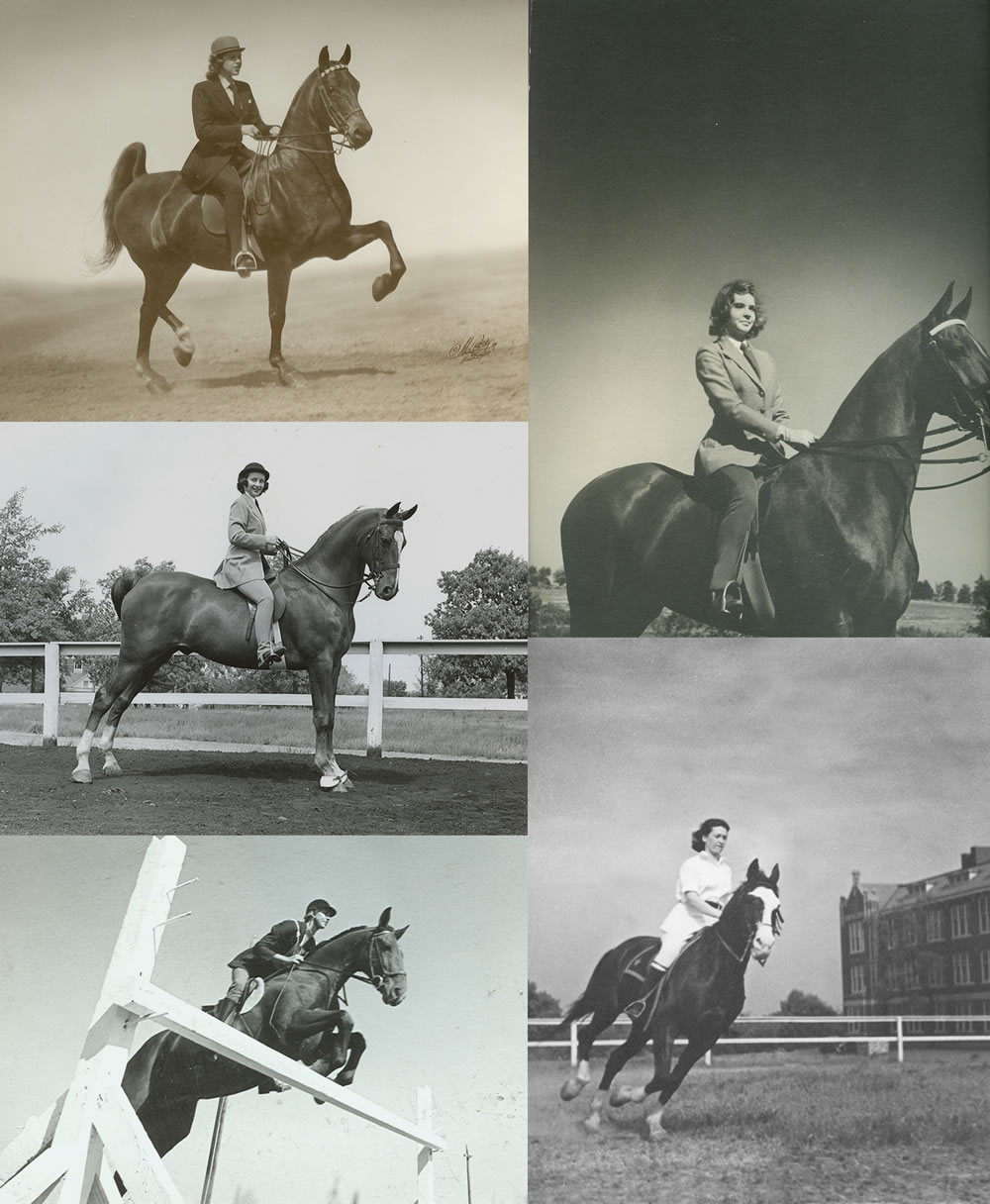
 

OVER 100 YEARS OF EQUESTRIAN LEADERSHIP

The first university in the United States to offer a four-year degree in equestrian science, William Woods has been the name to know in equestrian studies since 1924.

The William Woods University programs combine a strong theoretical foundation with the riding, teaching, training, and business skills you will need for a successful equine career.
 

 ACADEMIC PROGRAMS

William Woods University offers three distinct academic programs in equine studies, giving students the flexibility to shape their education around their interests and career goals.

Equine General Studies

Equine General Studies

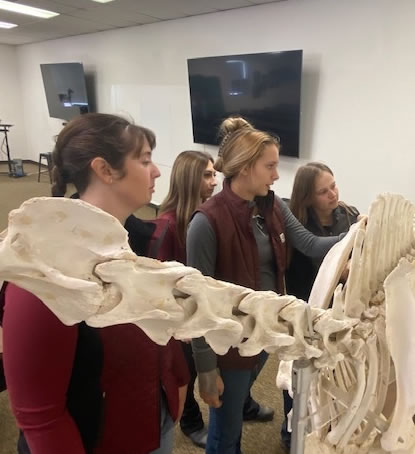
A Bachelor of Science in Equine General Studies combines broad horse knowledge with flexible academic options, giving students a well‑rounded foundation for many roles in and around the equine industry. Blending coursework in equine science, management, and riding with electives in areas like business, communication, or education, allowing students to tailor the degree to their interests.
 

  • Access to a range of equine careers
  • Strong foundation in horse care and management
  • Hands‑on experience and job readiness
  • Development of transferable skills
  • Platform for further specialization or education
Equestrian <br>Science

Equestrian
Science

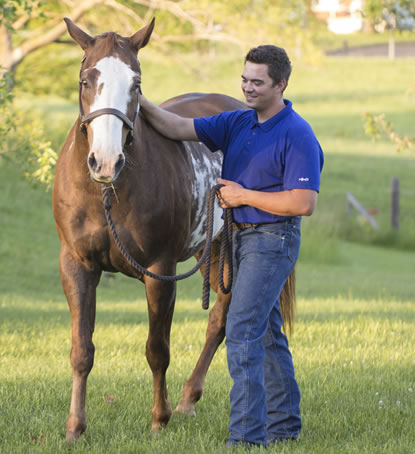
A Bachelor of Science in Equestrian Science offers a blend of advanced horsemanship, science, and business skills that can open doors to many horse‑related careers, such as training, teaching, and barn or program management. It provides in‑depth knowledge of equine anatomy, nutrition, health, and behavior alongside extensive hands‑on experience in riding, horse care, and stable operations, helping graduates be truly job‑ready.
 

  • Opens diverse equine career paths
  • Builds deep technical horsemanship and horse‑care skills
  • Provides intensive hands‑on and teaching experience
  • Develops equine business and management capabilities
  • Strengthens transferable professional skills
Equine <br>Administration

Equine
Administration

A Bachelor of Science in Equine Administration focuses on the business and organizational side of the horse industry. It combines courses in accounting, marketing, management, event planning, and communications with equine‑specific content like facility operations and industry regulations. The strong emphasis on business and leadership skills allows movement into other agricultural, recreation, or small‑business management roles.
 

  • Builds strong business and management skills
  • Prepares students for administrative and leadership roles
  • Combines equine industry knowledge with practical horsemanship
  • Develops transferable skills—organization, leadership, communication, problem‑solving
  • Creates a solid platform for further education in fields like business, nonprofit management, or equestrian education

FOUR SEATS, UNLIMITED POTENTIAL

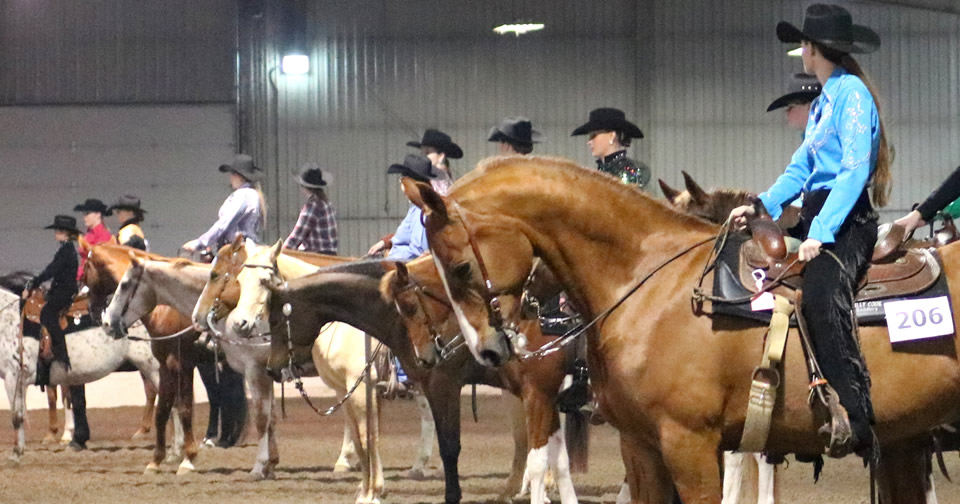
While the western discipline has its roots in the ranches and wide open spaces of yesteryear, it has become a style of riding that has embraced tradition with a modern twist. The discipline now includes many types of horses and competitive events. Horse shows that feature western-style horses will include a wide variety of classes from reining, ranch horse, and western pleasure, to trail, showmanship, and pleasure driving. William Woods faculty has decades of western equestrianship under their belts – as trainers, ranch hands, competitors and educators.
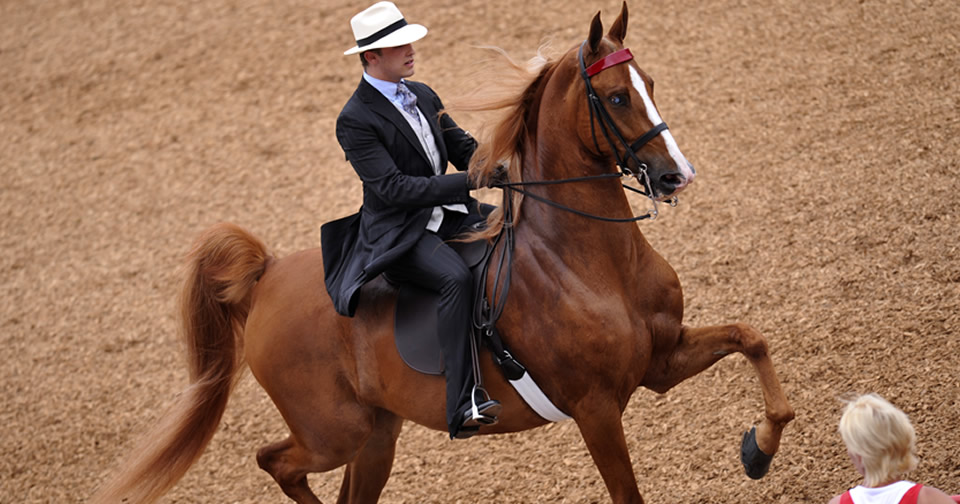
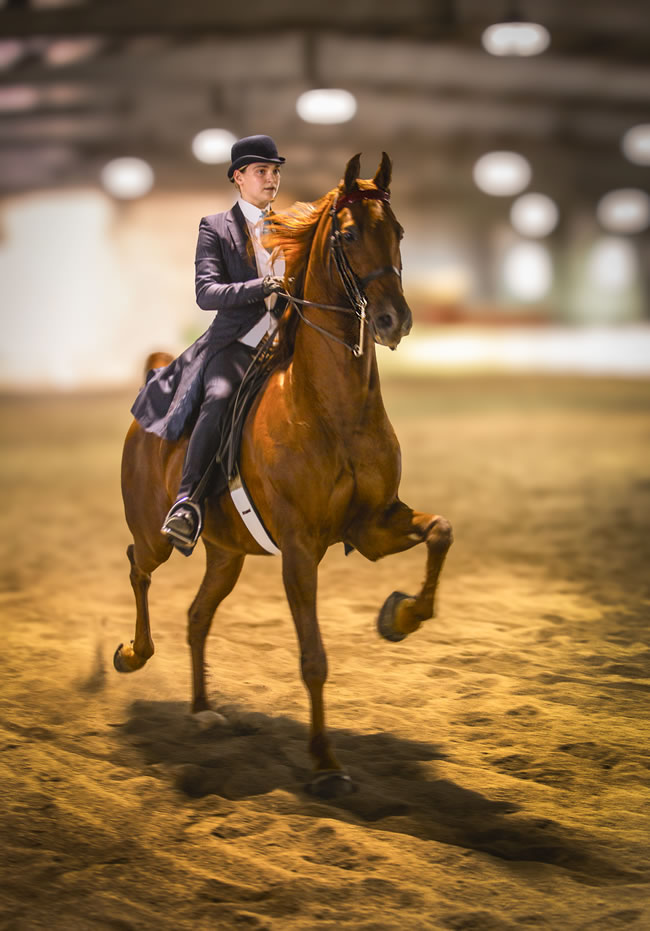
A unique American riding style, Saddle Seat riders use subtle cues to show off the horse’s energetic movement and exaggerated front end motion. Riders can compete in classes such as five-gaited, three-gaited, park, fine harness and country pleasure. Sutdents at William Woods learn skills and management techniques that are unique to this remarkable discipline. Thanks to William Woods’ 50+ year-long investment in this style of riding, WWU graduates enter the workplace with a pedigree largely unknown by graduates of other college-level equestrian programs.
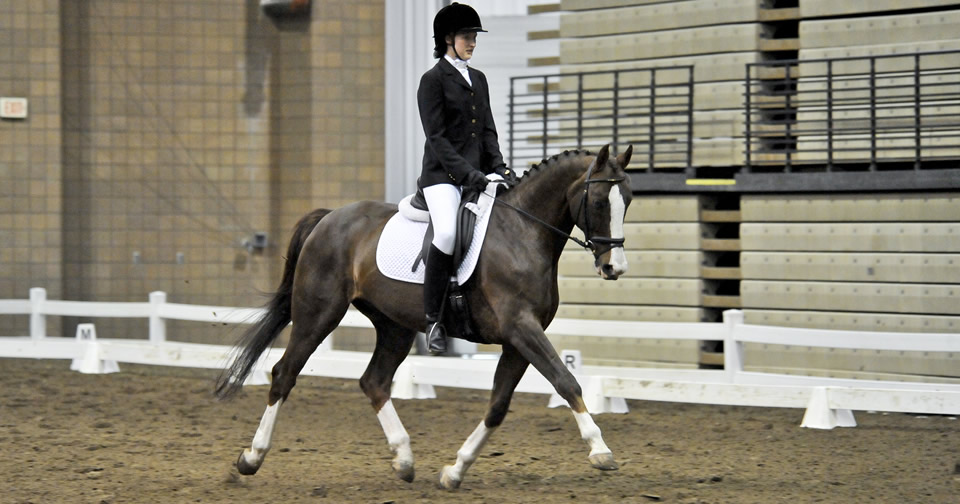
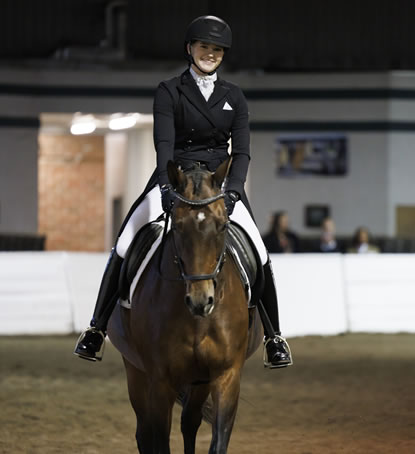
An Olympic sport since 1900, dressage is a highly developed, classical form of horsemanship which dates back to the 4th century, B.C. The term dressage originates from the French verb dresser, or “to train.” At its core, dressage is the art of riding and training the horse in a manner that develops harmony, flexibility, athleticism, and balance. Riders and horses are developed in our dressage program with emphasis on fitness and impulsion gained through rhythm, relaxation, and tempo. Students compete at a variety of shows, and work the U.S. Dressage Finals as volunteers.
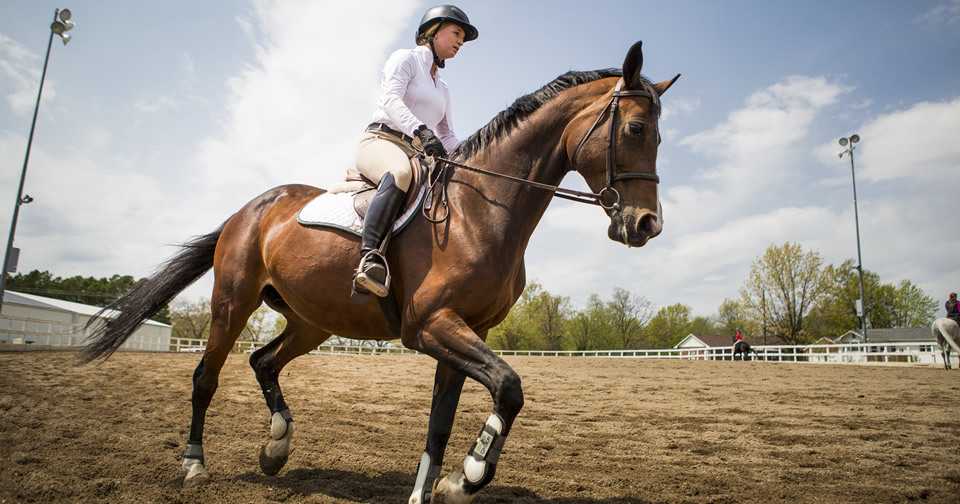
The hunter horse and rider work to develop a consistent and effortless performance over traditional, hunter-style fences. The ideal hunter shows superior manners, style, and grace over a challenging course of fences. The jumper horse and rider are the ultimate demonstration of athleticism, teamwork and bravery, as they attempt to beat the clock and clear the jumps. This incredibly exciting style of riding has been a center piece of William Woods Equestrian program for over 50 years and our students excel in Hunter-Jumper competitions all across the U.S.
OUR FACULTY

Alanna Bielawski

EQS Horse Manager

Liz Haben

Associate Professor

Gayle Lampe

Professor Emeritus

Bailey McCallum

Assistant Professor

Paul Schiltz

Associate Professor

WHAT WE PROMISE


  • Direct Path to Equine Careers 

  • Strong Hands-On and Technical Skills 

  • Broad, Transferable Skill Set 

  • Professional Networking and Industry Entry 

  • Alignment with Personal Passion and Well-Being 


CENTER FOR EQUINE MEDICINE

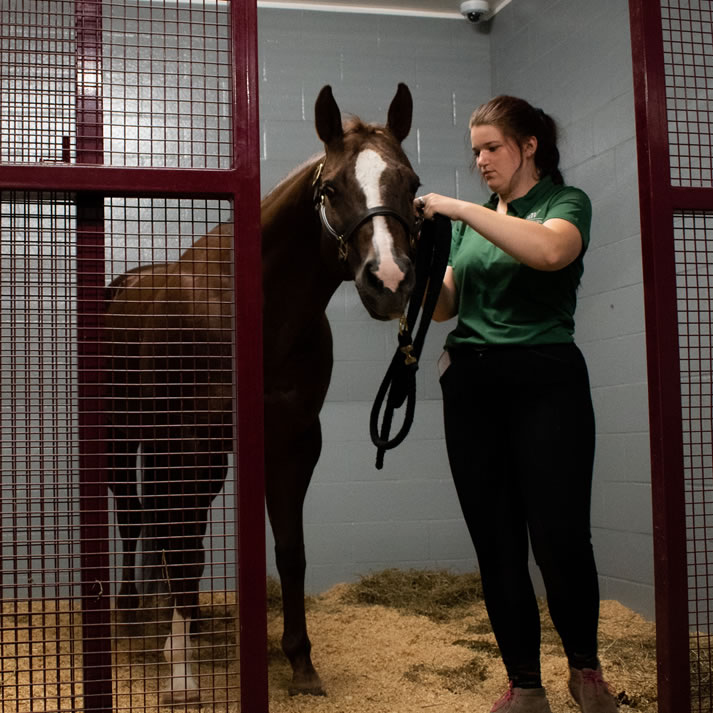
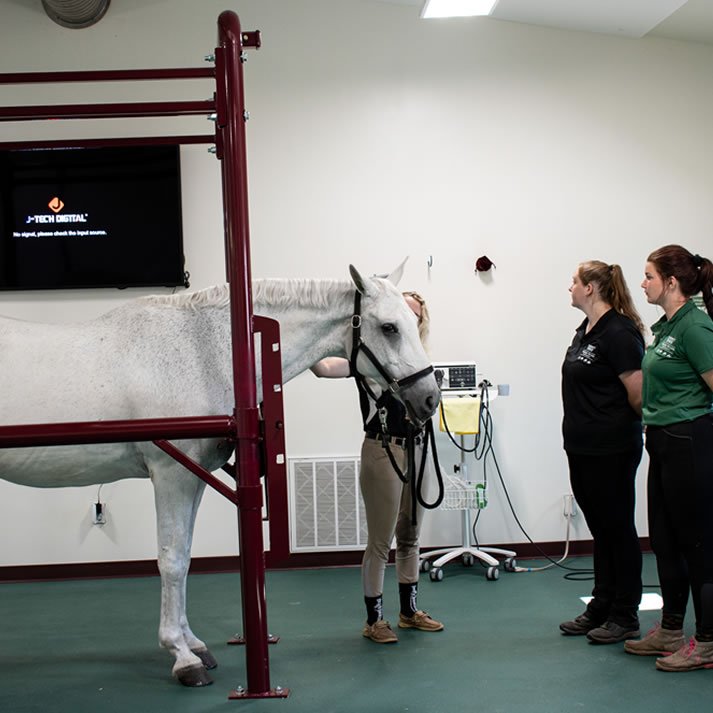
William Woods University’s state-of-the-art Center for Equine Medicine (CEM) serves a dual role as a hands-on learning complex for our students and as a dedicated care facility for our university horses.

The CEM offers:

  • A full-time doctor of veterinary medicine who has an extensive background in sports medicine, reproduction as well as general equine medicine and surgery.
  • A 17-acre property located within blocks of the university — ideally suited for continued equine research and care.
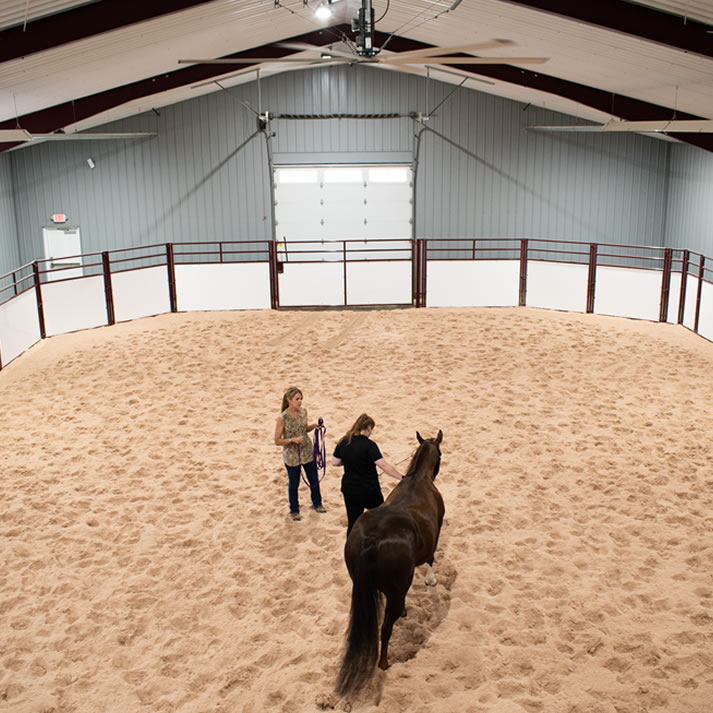
  • A facility that includes classroom space, an indoor riding area, four horse stalls, an isolation area for ill and contagious horses and a home for the veterinarian and his family, which allows him to be on-site in case of emergency.
  • The unique opportunity to participate in a hands-on classroom environment that will enhance your education, including the opportunity to assist with emergency care and treatment, perform research and gain hands-on clinical experience.

OUR ALUMNI

Claire Murphy ‘18

Senior Digital Marketing Manager, Kimes Ranch


“WWU’s Equestrian Program showed me just how many directions a career in the horse industry can take. I’m so grateful for my time at WWU. It gave
me the foundation to build a career I’m passionate about, and I truly can’t
imagine working in any other industry. It also led to relationships that have
lasted well beyond graduation and endured across many state lines.”
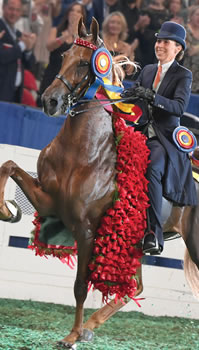
Tiffany Wheeler ‘99

Owner/Trainer of Autumn Hills Farm, LLC


“The foundation and connections I gained through this unique program
have made all the difference in my career. William Woods University did
not simply prepare me for a job—it empowered me to pursue a calling.
The hands-on experience I received while at The Woods, along with the
summer internships I was placed into, was absolutely invaluable.”
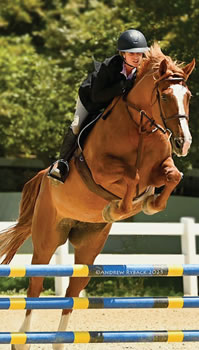
Jojo Kyger ‘17

Owner/Trainer, Just Cruising Equestrian Center


“The decision to go to William Woods for Equestrian Science shaped my life
and career in the best possible way. My education at WWU prepared me
for navigating a challenging industry, and my mentor from William Woods
is a huge part of my life to this day. The connections I made at WWU have
become relationships I value deeply, both professionally and personally.”
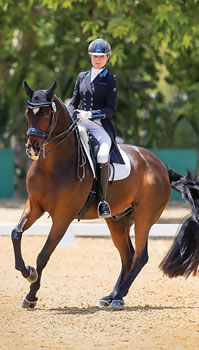
Emily Wolf ’21

Owner, Wolf’s Equine Extensions


“The equestrian program at William Woods was an essential part of my life
path that nothing else would have  been able to prepare me for. And my
experience was not limited to my riding, it allowed me to become open-minded to a professional industry of grooming and pursue my own business in equine tail extensions, along with developing my horses in dressage.”


FREQUENTLY ASKED QUESTIONS

About our Degree Programs

Equine science, also called equestrian science or equine science and management, focuses on the biology, care, nutrition, reproduction, health, behavior, and business aspects specific to horses.

Key Focus Areas

Programs emphasize horse anatomy, physiology, exercise science, breeding, and facility management, often with hands-on training in equitation and industry operations. We blend scientific study with practical skills for careers like stable management, equine nutritionists, or breeding farm roles.

Vs. General Animal Science

Animal science covers a broad range of species including livestock, poultry, companion animals, and sometimes horses, providing foundational biology and physiology across them. Equine science narrows exclusively to horses, adding specialized courses in equine management, leadership, and economics tailored to the horse industry.

Vs. Biology

Biology is a general life sciences field studying all organisms at molecular, cellular, and ecological levels without species-specific applications.
Equine science applies biological principles directly to horse welfare, production, and industry needs, prioritizing practical equine health and business over broad theory.

William Woods’ Equestrian Science major is heavily applied/horse-focused, with a smaller portion made up of biology/anatomy/physiology-style science courses. The equestrian curriculum includes courses like Equine Anatomy and Physiology, Practical Equine Anatomy & Conditioning, Theory of Equine Behavior & Training Methods. Most instruction is delivered as classroom-plus-lab format.

A large share of the major’s 70 equestrian credits are in Equestrian Studies (EQU) and Riding (EQR): riding classes in the four disciplines, teaching-technique sequences, groundwork/ground training, facility and horse management practicums, tack construction, and equine industry/leadership courses.

Our comprehensive approach includes training, handling, managing and caring for horses with an emphasis on riding, teaching, training, and business skills alongside theory. Daily work with horses, barns, and lesson programs is a central component, not an add‑on.

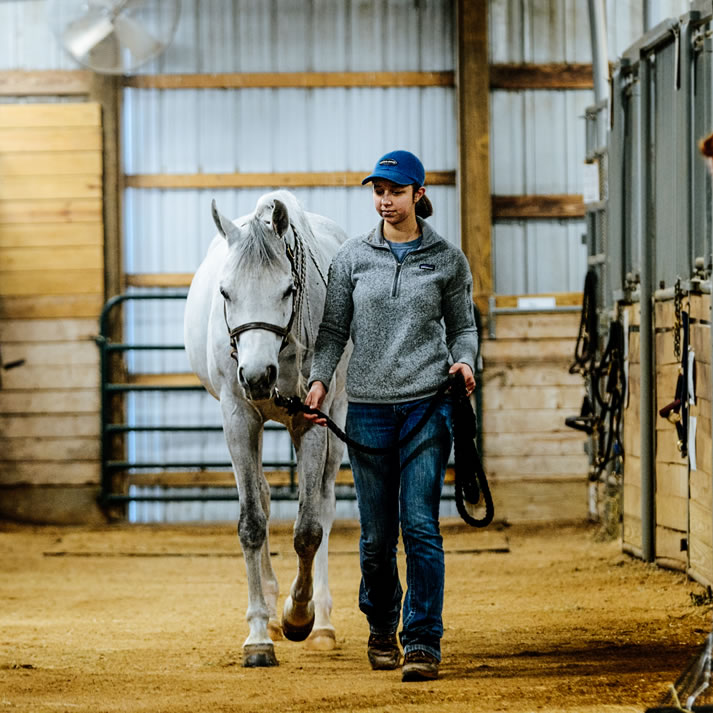
You will ride frequently, handle horses on the ground daily, and have structured barn, management, and clinical responsibilities built into classes and optional work.

Riding classes (EQR)

Included are seat‑specific riding courses in hunter/jumper, dressage, saddle seat, and/or western, from fundamentals through advanced levels (for example, Fundamentals of Dressage, Hunt Seat, Saddle Seat, Western, then intermediate and advanced versions).
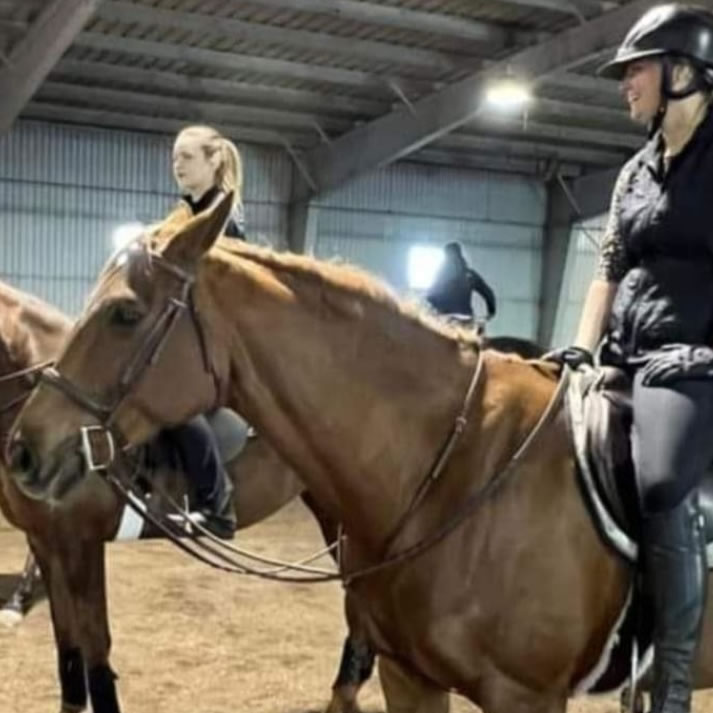
These are regular lab-style classes where you ride WWU horses, practice schooling, warm‑up techniques, training methods, and show-ring strategies under instructor supervision.

Groundwork and training labs

These classes are explicitly split into lecture plus hands‑on lab time in the barn, so you apply behavior and training theory directly in handling sessions.

Barn and management practicums

Horse Management Practicum, Facility Management Practicum, and similar EQU courses put you into day‑to‑day barn work and operations, including feeding routines, stall care, turnout, scheduling, and show preparation.

Center for Equine Medicine and clinical work

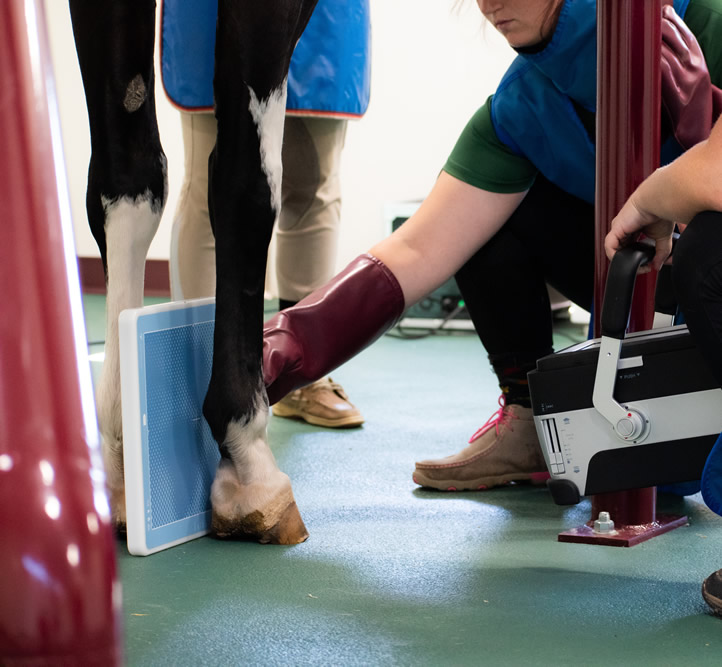
At the Center for Equine Medicine, students assist with routine and emergency care, help with treatments, and may participate in small clinical or health-related research projects involving the university horses. Students will have hands-on experience with lameness exams, medical procedures, and health monitoring that complements anatomy and physiology coursework.

Jobs, internships, and summer work

The program strongly encourages internships in training barns, show programs, or other equine businesses; these can be taken for credit and are aligned with your discipline and career goals.

WWU also hires students each summer to work full‑time in the university stables, where you handle horses daily, help manage the facility, and often get extra riding and showing opportunities beyond regular classes.

Admissions, Courses, and Structure

William Woods does not require a specific “equine” background for admission to the Equestrian Science major, but certain high‑school classes and experiences will make you much better prepared.

High‑school classes that help most

Solid college‑prep science: biology is the big one; anatomy/physiology or animal science (if your school offers them) are a plus.

Strong English/communication: you will write lab reports, training plans, and internship reflections, so good reading and writing skills matter.

Basic math: algebra and any statistics you can take will help with science courses and business/management topics.

Any agriculture or FFA courses related to animal care, veterinary science, or agribusiness are useful background, but not mandatory.

Your first year mixes an equestrian-specific seminar, intro horse-industry theory, basic health/management, and foundational riding.

Typical first‑year equestrian classes

EQU 101 Equestrian First Year Seminar
EQU 111 Introduction to the Horse Industry
EQU 117 / 118 Theory of Performance Horse Health Management I–II

Riding and Skills 

EQR 120–125 “Fundamentals” riding courses
EQR 111/112 Introductory Forward Seat or Saddle Seat
EQU 201 Horse Management Practicum I
EQS 208/209 Survey of Groundwork Techniques 

The Equestrian Science major itself is 70 credits of equine‑specific coursework (EQS/EQU/EQR classes such as riding, horse management, anatomy/physiology, training, teaching techniques, etc.). That leaves roughly 50–52 credits for general education and free electives outside the equine major.

William Woods’ Equestrian Science major is built as a standard 4‑year bachelor’s degree.

Careers and Outcomes

With a bachelor’s degree in equine/equestrian science, typical paths include:

  • Barn or facility manager (lesson barns, training stables, show barns, boarding facilities).

  • Assistant trainer or rider (schooling horses, starting young horses, exercising show horses).

  • Riding instructor/coach (lesson programs, camps, collegiate or IEA/4‑H teams, therapeutic programs with extra certification).

  • Equine business staff or manager (breed/discipline associations, show management, sales barns, racing operations).

  • Equine health and support roles (vet assistant/tech with extra training, rehabilitation/conditioning, nutrition/ feed sales, pharmaceutical or tack/feed rep).

  • Program coordinator roles in therapeutic riding, youth programs, or university barns (with PATH Intl. or similar certifications if it’s therapy‑focused).

Graduates with equine/equestrian science degrees most often combine several of these roles over time rather than doing just one.

Direct training and riding roles

  • Trainer/assistant trainer: starting young horses, schooling show horses, problem‑solving behavior, often plus some riding instruction.

  • Exercise rider or professional rider: conditioning and tuning horses for trainers, owners, or racing barns.

  • Riding instructor/coach: lesson barns, youth/4‑H/IEA/collegiate teams, camps; often needs teaching certifications over time.

Management, breeding, and operations

  • Barn or facility manager: overseeing staff, feeding, turnout, health routines, scheduling lessons/shows, client communication.

  • Breeding or broodmare/stallion manager, foaling attendant: coordinating breedings, foal care, and reproductive records (often at breeding farms or racing operations).

  • Show or event management: horse show office staff, show manager, course designer’s assistant, show secretary.

Health, nutrition, and rehab

  • Equine vet assistant or tech (sometimes with extra credential): assisting with exams, treatments, imaging, and client education.

  • Equine nutrition/feed representative: advising barns and vets on rations, selling feed or supplements, doing basic ration balancing.

  • Rehab/conditioning specialist: working in rehab barns or vet hospitals on post‑injury conditioning, hydrotherapy, and exercise plans.

Business, sales, and industry support

  • Bloodstock or sales roles: matching horses to buyers, working at sales barns or auctions, pedigree research.

  • Product or pharmaceutical sales: representing feed, supplements, tack, therapeutic equipment, or medications to vets and barns.

  • Association/organization jobs: breed or sport‑governing bodies, event organizers, membership services, marketing and communications.

Education, outreach, and therapy

  • Therapeutic riding instructor (with PATH Intl. or similar certification): adaptive riding programs, hippotherapy teams.

  • Program director or coordinator: running youth equestrian programs, camp programs, or college barn programs.

  • Extension or outreach roles (usually with more education): equine-focused extension agents, clinicians, or educators.

Plug for pre-vet, grad progs, etc.

EQUINE INDUSTRY OUTLOOK

The equine industry is large, economically important, and expected to keep generating jobs, especially for people with strong hands‑on and business skills.
Size and Economic Impact
  • The U.S. equine industry contributes around 177 billion dollars in total economic impact and is linked to about 2.2 million jobs (direct and indirect).
Overall Job Outlook
  • Equine work is part of the broader “animal care and service workers” group, which is projected to grow about 11 percent annually, faster than average for all occupations.
Where growth is strongest
  • Service and care roles: trainers, grooms, stable staff, boarding and lesson barns, and therapeutic riding programs tend to see steady or rising demand as more people keep horses or seek equine‑assisted services.
  • Equine‑adjacent careers: feed, pharmaceuticals, equipment, events, marketing, consulting, and product development also contribute many jobs and benefit from industry expansion.
The Future
  • Building a mix of equine skills, education, business, communication aand science training tends to improve stability and advancement potential.

VISIT US

There’s no better way to experience the heart of William Woods University’s equestrian program than by visiting campus in person. Come see our world-class equine facilities, meet the dedicated faculty and trainers who make learning hands-on and personal, and talk with current students who live and breathe their passion for horses every day. From our spacious indoor and outdoor arenas to the friendly, supportive community you’ll meet, a campus visit will show you exactly why William Woods is a leader in equestrian education. Schedule your visit today and take the reins on your future in the equine industry!