 English
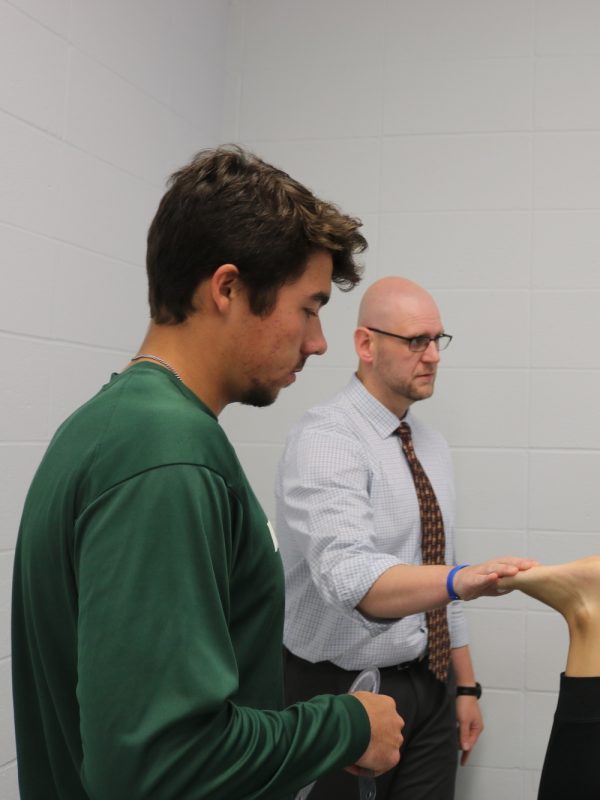
If you’re interested in adding an understanding of fitness and the biology behind sports and activity, a minor in exercise science can serve as a great addition to any major. Understand the physiological process behind movement — how the body responds to work, how it adapts to exercise and what training methods work best for particular populations.
The minor in exercise science at William Woods University includes 15 required course credits and 6 required elective credits.
Minor Requirements
Core Credits: 11.00
|
This introductory course will introduce students to basic nutrients, their functions, and the effects of various supply/demand states on physical well-being. Students will take a look at their own nutritional health and identify areas for improvement. Discussion will include the role of carbohydrates, fats, proteins, vitamins, minerals, and hydration on performance and optimal health. Prerequisite: EXS100 credits:
|
Introduction to Human Nutrition | 3 |
|
This course will provide the learner with an overview of the gross anatomy of the human body. The course covers the anatomy of the integumentary, skeletal, muscular, cardiovascular, pulmonary, endocrine, digestive, and reproductive systems. To prepare the learner for progression through the Exercise Science sequence, an emphasis in the course will be placed on musculoskeletal anatomy including hands-on labs Corequisite: EXS206 credits:
|
Intro to Human Anatomy | 4 |
|
This course is designed to provide the learner an overview of the function of the human body. The course covers the physiology of the integumentary, musculoskeletal, neuro-endocrine, cardiopulmonary, digestive, and urinary-reproductive systems. This course will place an emphasis on musculoskeletal and cardiopulmonary adaptations to exercise. Prerequisite: EXS205 Corequisite: EXS246 credits:
|
Introduction to Exercise Physiology | 4 |
Exercise Science Elective - 9 Credits
Movement Elective - 3 Credits
|
Students will develop a deeper understanding of human anatomy, physiology, and biomechanics as it relates to exercise and sport. This course will help students analyze movement, identify muscle activity, and learn strategies for improving or maintaining muscular strength, endurance, flexibility and overall health. Students will build a foundation of understanding and apply methods for maximizing movement from head to toe. Prerequisite: EXS 205 credits:
|
Kinesiology | 3 |
|
This course will provide the learner with the knowledge of the developmental stages of the neuromuscular system to allow for movement acquisition, how children learn and control new movements, and how this relationship leads to motor planning over a lifespan. Learners will be engaged in hands on learning in which students will be able to blend theory with practice in real life situations. Prerequisite:EXS321 credits:
|
Motor Learning and Development | 3 |
Electives
|
This course is designed around the American Red Cross Responding to Emergencies: Comprehensive First Aid/CPR/AED. In this course the student will be educated on proper Cardiopulmonary Resuscitation for the adult, child and infant. Also, the student will be taught how to identify and care for several sudden illnesses, as well as, proper First Aid techniques and procedures for bodily injuries ranging from minor bleeding to severe musculoskeletal conditions. Upon completion of this course, proper demonstration of skills, and meeting American Red Cross guidelines the student will receive American Red Cross certification in CPR/AED for Adult, Child, and Infant, as well as certification in First Aid. This certification will last for two (2) years. Physical Requirements: The student will also have to perform several skills that will require them to be in a crouched, kneeling, or squatted position for a minimum of five (5) minutes. credits:
|
First Aid and CPR | 2 |
|
An analysis of the significance of physical activity in society and culture. Motivation and self-concept as applied to play, game, sport, and athletics are examined. credits:
|
Social Science in Sport-U | 3 |
credits:
|
Independent Study | 3 |
|
Prevention and care of athletic injuries is essential for any future professional working with active people and athletes. Coursework is designed to assess status and at-risk individuals, enhance the safety of activity and competition, and care for injury and illness within their future scope of practice Prerequisite: EXS104 and (EXS123 or EXS245) Corequisite:EXS304 credits:
|
Prevention and Care Athletic Injuries | 3 |
|
Lab class taken in conjunction with EXS 303 – Prevention & Care of Athletic Injuries. Hands-on learning in basic athletic training techniques. Prerequisite: EXS104 and EXS245 Corequisite:EXS303 credits:
|
Prevention and Care Lab | 1 |
|
Students will gain an appreciation and understanding of the human body’s response to resistance and conditioning exercises, learn proper technique and safety precautions through lecture and laboratory experiences. Students can obtain a certificate in Foundations of Coaching Lifts through the National Strength and Conditioning Association upon completion of essential coursework and skills demonstration Prereqisite: EXS205 Corequisite:EXS342 credits:
|
Techniques of Resistance Training and Conditioning | 3 |
credits:
|
Advanced Projects | 3 |
|
An introduction to the theoretical concepts and current research in the psychology of sport and exercise. credits:
|
Sports Psychology | 3 |
|
This course will serve as the capstone for the Exercise Science program. Learners will be immersed in multiple, hands on opportunities to learn the value of performance data, how to collect and analyze the data, and how to make recommendations to improve programs based on its findings. Students will demonstrate knowledge of basic statistical analyses. Students will also analyze and present research projects in three formats: written manuscript, oral presentation, and poster presentation. credits:
|
Research in Sport Science | 3 |
|
Adapted Physical Education explores topics that relate to understanding exceptional students and athletes of all ages in order to promote differentiated instruction in all areas of activities. Students will immerse themselves in discussion of how Adapted Physical Education started, analyze laws that have been created, identify and demonstrate fitness skill modifications and physical fitness testing modifications. These skills will allow for students in all disciplines to better understand the exceptional athlete and how to design programs that will help them reach their goals. credits:
|
Adapted Physical Education | 3 |
|
The purpose of this course is to introduce students to current ethical problems in sport. Emphasis will be placed on having students analyze, evaluate, & articulate positions on issues related to sport. Topics include Fair Play, The Limits of Being Human, Gender Equity, & Race/Social Justice. credits:
|
Sports Ethics -Q | 3 |